
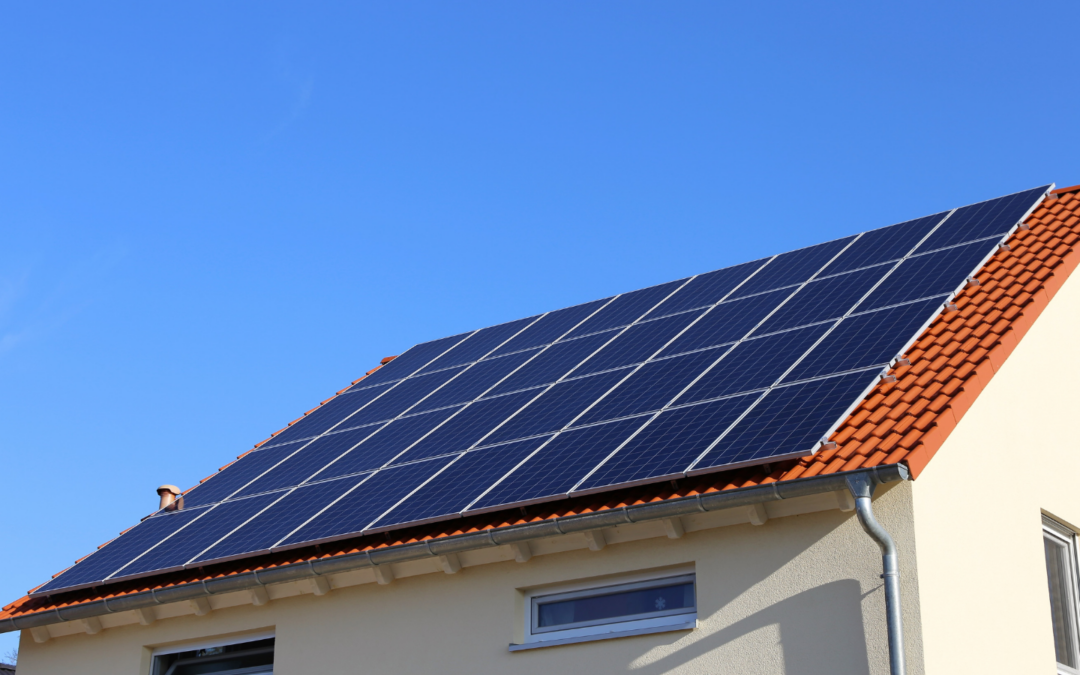
From January 1, 2026, property owners can deduct up to 20% in their Income Tax return for installing renewable energy self-consumption systems. A measure approved by Royal Decree-Law 7/2026 that you should be aware of before the end of the year.
What does this new deduction consist of?
The Government has approved, through Royal Decree-Law 7/2026, a new deduction in personal income tax This is specifically for those who install self-consumption electricity systems based on renewable energy sources, such as photovoltaic solar panels, by 2026. The installation may also include storage systems, i.e., batteries.
This is a new tax incentive, different from the existing energy efficiency deductions. Its impact will be felt in the 2027 Income Tax Return, corresponding to the fiscal year 2026.
How much can I deduct?
There are two tiers depending on the type of property:
10% – For owners who install the system in any property they own (single-family home, premises, etc.).
20% – For homeowners located in buildings predominantly for residential use where the collective installation has been carried out.
The The maximum deduction base is 5,000 euros per yearexcluding any public subsidy received or pending resolution.
What expenses can be included?
All expenses related to the installation are considered deductible:
- Equipment and materials (panels, inverters, batteries…)
- Labor and installation
- Works necessary to carry it out
Important: Payment must be made by card, bank transfer, nominative check or deposit into account. Cash payments are not accepted in order to apply the deduction.
Who does it affect and what requirements must be met?
Individuals and homeowners
This deduction is primarily intended for natural persons who want to reduce their energy bill and, at the same time, obtain tax savings. However, there are conditions to meet:
- The installation must complete before December 31, 2026.
- It is necessary to have all the legal authorizations, including the Electrical Installation Certificate (CIE).
- The system cannot be subject to an economic activityIf it becomes linked to a business in the future, the right to the deduction would be lost.
Homeowners associations and residential buildings
If the installation is carried out in a building for predominantly residential use, each owner may apply the deduction of 20% on their proportional share of the expenditure. It is a particularly interesting opportunity for communities that are considering making the leap to shared self-consumption.
Self-employed
Self-employed individuals who install the system in their main residence (and not in the premises or space used for their business) may benefit from the deduction. If the property is linked to the business activity, the installation would not be eligible for this incentive.
Incompatibilities to consider
This deduction It is not compatible Deductions for energy efficiency improvement works in homes (those that measure the reduction of primary energy consumption) are not applicable when the work involves the same property and the same installation. It is also not possible to apply both the 10% and 20% sections simultaneously to the same project.
If you have doubts about which deduction is most convenient for you, it is best to analyze your specific case before making a decision.
When does it apply to the declaration?
The deduction is made in the fiscal year in which the installation is completedSince the deadline is December 31, 2026, it will be reflected in next year's income tax return (2027 campaign).
A practical example
Imagine you install solar panels on your single-family home for a total cost of 4,000 euros (without subsidies). With the 10% deduction, you could recover 400 euros directly in your next tax return. If the installation is carried out in a residential building and the total cost is €5,000, the 20% deduction would mean 1,000 euros less to pay.
Do you have questions about how to apply this deduction?
Every situation is different: the type of property, whether a subsidy is available, the payment method, or whether you are self-employed are all factors that can change the outcome. At our consultancy in Cieza, we analyze your case so you can take full advantage of all available tax benefits.
Contact us for a free consultation and start planning your installation wisely.
Regulatory source: LIRPF additional provision 62nd, introduced by Royal Decree-Law 7/2026, art. 36.Three, BOE 21-3-2026.
 English
  Spanish