
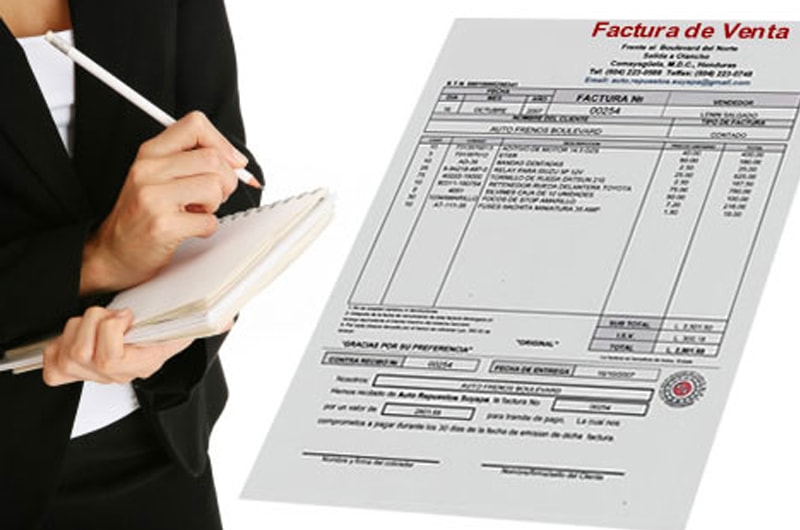
In the first place, it should be noted that a large part of the self-employed do not have to make withholdings on their invoices, specifically those registered in business activities, which are those included in the first section of the Economic Activities Tax (IAE).
Self-employed professionals must, as a general rule, include personal income tax withholdings on their invoices, when the client is another self-employed person or a company. Self-employed professionals are understood to be those registered in the second and third sections of the Economic Activities Tax (IAE), relating to professional activities and artistic activities.
When a self-employed professional is registered with the Economic Activities Tax (IAE), they are obliged to withhold personal income tax on their invoices, when the client is another self-employed person or a company. According to information from the Quipu billing software, published by Agencia EFE, the result on the invoice will be the tax base, plus the corresponding VAT, minus the personal income tax.
Personal income tax for the self-employed.
Personal income tax is a tax that is levied on personal income. The self-employed are advancing their payments periodically with the Treasury. With the income statement, the income obtained by that professional is recalculated, adjusting the IRPF percentage based on the amounts withheld and invoiced. If more than one 70% has been retained in billing, the self-employed person will be exempt from declaring model 130 every three months.
Exceptions to the regulations
In the event that the self-employed worker is registered in the first section of the IAE, it is not necessary to withhold personal income tax.
In the case of professional or artistic activities, you must retain the IRPF 15% on your invoices.
In the case of new self-employed workers in professional activities, in the year in which they register and the following two, the withholding to practice is 7%, provided that in the previous year we have not carried out professional activities. From that moment the withholding will be 15%.
It is a necessary requirement not to have been registered in an economic activity in the previous twelve months in order to be entitled to this reduced withholding, which improves the liquidity of the person who obtains it and therefore helps to start the activity and undertake.
If it belongs to activities under objective estimation by modules, the withholding that must be applied to each invoice will be 1%.
Agricultural, forestry and livestock activities must apply the 2% for personal income tax withholding, except for pig fattening and poultry farming activities, in which it will be 1%.
Invoices to private customers do not carry withholding since these individuals do not submit withholding statements to the Treasury. You must always include them in invoices that you issue to other self-employed workers (in business or professional activities) and to companies and legal entities.
In any case, the type of withholding to practice is not defined by the registration with the Treasury (model 037 or model 036). That is why it is very important to have good advice before doing it. If you need help, our tax advice department for the self-employed can take care of everything. contact and we will call you.
 English
  Spanish