
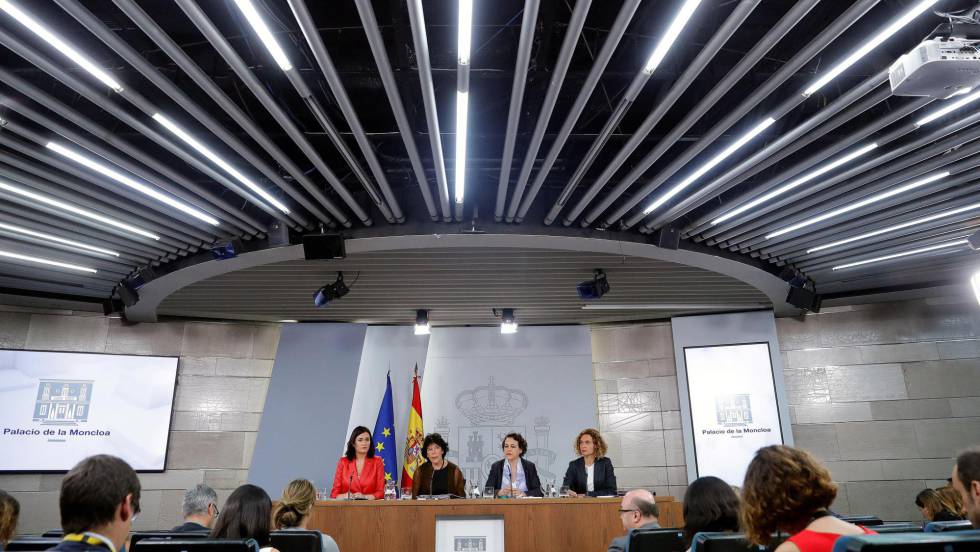
The Inspection Plan for Decent Work began to be applied on August 1
The Government has already given the green light to the project against labour exploitation. The plan For a decent job will consist of 75 measures to combat fraud in the labour market. The first measures will be applied from 1 August. Two shock plans will then be launched against abuses in temporary contracts and part-time employment. It is also planned to reinforce the resources and increase the staff of the Inspection. Among the initiatives included in the plan is the proposal of the Ministry of Labour to create a specialised prosecutor's office for crimes against labour rights.
To combat job insecurity, the Ministry of Labour proposes, among other measures, that the Labour Inspectorate sign a collaboration agreement with the State Attorney General's Office. Another section of the Master Plan against job insecurity from 2018 to 2020 includes the proposal to create a "specialised prosecutor's office for crimes against workers' rights", adopting one of UGT's objections to the first draft of the Labour Inspectorate.
“We have to discuss it and it won’t be easy. The Prosecutor’s Office is usually strict with this,” they admit in the Ministry. Other sources from the same department recall that years ago a specialised prosecutor’s office for workplace accidents was created, which is focused on protecting the “right to life and physical integrity of workers.” The current initiative seeks to “better combat” the fight against workplace crimes “and above all would have a deterrent effect on this type of conduct,” they point out in the Ministry of Labour.
The budget for the Labour Inspection will increase by 10% in 2019 and 2020
The criminal code already includes punishments for these cases ranging from three months to six years in prison. One of these crimes, for example, penalizes anyone who “through deception or abuse of a situation of need, imposes on workers in their service working or social security conditions that harm, suppress or restrict the rights […] recognized in legal provisions, collective agreements or contracts.”
For Fermín Yébenes, spokesman for the Progressive Union of Labour Inspectors, the initiative is important. Based on the prosecutor's previous experience with workplace accidents, he points out that it could help increase the sensitivity of prosecutors towards this type of crime. He points, for example, to a concept in the penal code: "What is a situation of need? If there is training, they can be more receptive."
The position of the Labour Inspectors' Union is more sceptical, recalling that criminal law "must be governed by the principle of minimum intervention." Although this organisation values the proposal, it also points out that "the administrative procedure, whether through requests or through disciplinary proceedings, achieves a quicker response than through judicial instances."
In its assessment, the union calls for limits on "effective controls over the recording of working hours" and limits on training contracts to prevent "whole staff being made up of workers in training."
The proposal to create a specialised prosecutor's office is one of the 75 measures in the plan, which, according to Valerio at the end of the Council of Ministers, aims to "recover labour rights lost during the crisis years". It is also in line with the direction in which the entire plan aims, which seeks to end "the current situation in which inspection actions do not lead to a sanction and only lead, in most cases, to the conversion of temporary contracts into permanent ones".
Ability to deter
The intention would not be so much to punish and collect when violations are detected, the text of the master plan itself points out, “but to deter”. In other words, it aims to spread fear of the actions of the Labour Inspectorate to put an end to legal frauds so deeply rooted in the labour market such as the abusive use of temporary contracts.
In addition to the fight against temporary or part-time work that is actually full-time, there are also reports of subcontracting that leads to a deterioration in working conditions or increases the pressure on the use of false self-employment.
Along with the plan, the Ministry of Labour plans to increase the workforce from 20% to 25%, out of the current 1,900 inspectors and sub-inspectors. It estimates that in the coming years there will be some 400 losses and these will be compensated by 833 new additions.
For UGT and CC OO, the initiative is going in the right direction but is insufficient. “There is a lack of specificity in the measures and deadlines,” says CC OO. “The plan is equipped with a good diagnosis, but lacks resources,” says Pepe Álvarez (UGT).
On the other hand, the Council of Ministers also approved a decree to give equal access to unemployment benefits to those who work part-time every working day and those who work some days (weekends). The European Court of Justice had pointed out that the Spanish law penalised the latter and was also sexist since it is mainly women who work in this type of employment. Now “the period during which the worker has been registered will be taken into account, regardless of whether all working days have been worked, or only part of them”. This change affects some 35,000 workers.
 English
  Spanish