
The Directorate General of Taxes has confirmed that putting your business logo on a passenger vehicle does not guarantee that you can deduct your expenses in your income tax return. The key remains the same: exclusive use for the activity. And proving that is more difficult than it seems.
What has the DGT said?
The binding consultation V2119-25, dated November 11, 2025, responds to a professional who was planning to buy an electric car, use it almost exclusively for work, label it with his logo, name and phone number, and install a charging point at home with independent consumption measurement.
The question was clear: can I deduct the electricity cost of recharging from my income tax return?
The DGT's response is also this: No, if the vehicle is not exclusively used for the activity.
And the signage, by itself, does not guarantee that exclusivity.
What the regulations say
Article 22 of the Personal Income Tax Regulations establishes that a passenger vehicle can only be considered as being used for business purposes when it is used exclusively for her. Any personal use, even if occasional or residual, eliminates the possibility of deducting expenses.
This includes:
- Vehicle depreciation
- Fuel or recharging electricity
- Insurance, repairs and maintenance
- Renting or leasing fees
In the personal income tax (IRPF) There is no partial deduction For passenger vehicles. It's all or nothing.
Who has to prove what?
The burden of proof lies with the taxpayer. In other words, if the tax authorities question the deduction, it is you who must prove that the car is used exclusively for work.
This evidence can be provided by any legally admissible means: visitor logs, GPS, mileage records, etc. But it is the Administration that decides whether it considers this evidence sufficient.
Signage can be another element to consider, but it is not the determining factor on its own.
And the vans?
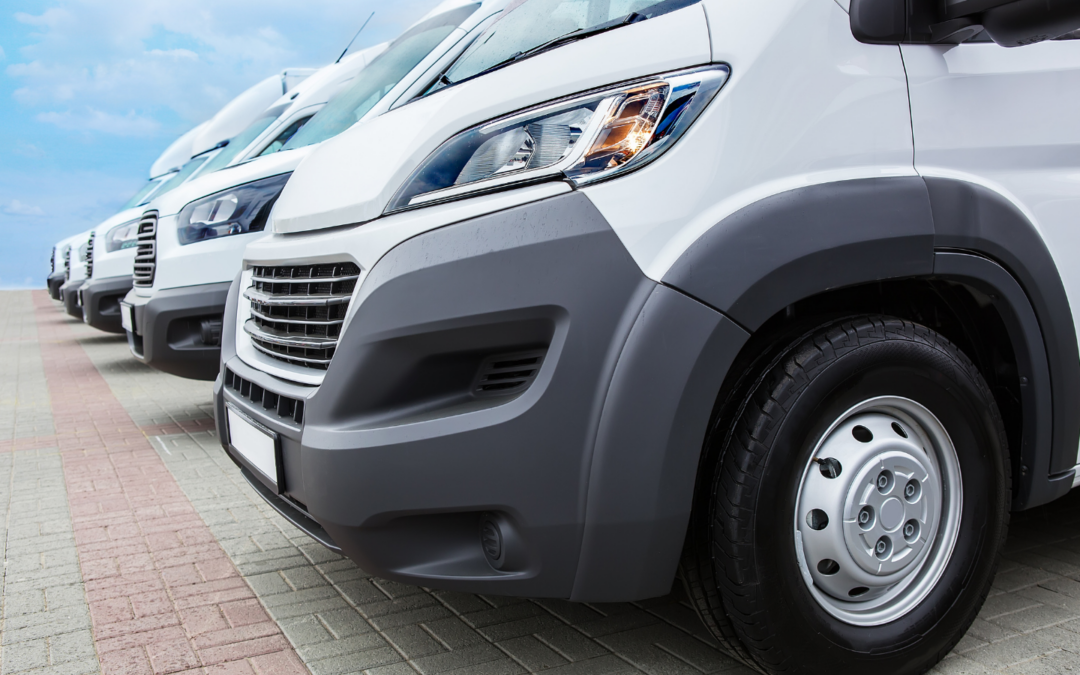
Here the rule works differently. For the mixed vehicles intended for the transport of goods —what we colloquially call vans— the regulations and the TEAC's doctrine do allow us to presume that they are used for business purposes, based on their physical characteristics and their usual use. This presumption is rebuttable, but it is the starting point.
With passenger cars, however, that assumption doesn't exist. Even if you use your car almost exclusively for work, that's not enough.
Who does this affect?
Self-employed and professionals: If you use a passenger car for your business and intend to deduct its expenses on your income tax return, you need to be able to prove that the vehicle is never used for personal purposes. In practice, this is very difficult to demonstrate with a regular car.
Companies and SMEs: The situation is different for Corporation Tax, as the exclusivity requirement does not apply. However, it is advisable to review each case in detail.
Electric vehicles: The same principle applies. Having a charging point with its own meter can make it easier to justify electricity consumption, but it doesn't solve the underlying problem if the vehicle isn't used exclusively for that purpose.
Practical recommendations
- If you have a car that you use for work, consider whether you can really justify the exclusivity before trying to deduct it.
- Check if a van or a mixed-use vehicle is more suitable for you, as the tax deduction is more accessible.
- Keep a detailed record of vehicle usage if you want to strengthen your position in the event of an inspection.
- Don't rely solely on signage: it's a helpful element, but insufficient.
Do you have questions about deducting your vehicle from your income tax return?
At our consultancy in Cieza (Murcia) we analyze your specific situation to help you correctly apply the deductions in the IRPF and avoid problems with the Tax Office. Contact us and we'll guide you without obligation.
 English
  Spanish